
Your strategy map is only as strong as the tool that tracks it, and most performance platforms leave goals disconnected from daily work. Managers waste hours in review cycles while OKRs drift off course. By the end of this article, you will know exactly which three tools align objectives, track progress in real time, and fit your budget, plus a clear number one pick for most teams.
We break down the essential features for strategy mapping, from goal alignment to progress visualization, then compare HeyRamp, Perdoo, and Futureworks against those criteria. You will also get practical guidance on team size, pricing, and HR workflow integration so you can make the switch with confidence.
What to Look For in Performance Management Tools for Strategy Mapping
When evaluating performance management tools for strategy mapping, the core challenge is finding software that translates high-level strategic objectives into actionable, measurable goals across every team. The right platform bridges the gap between strategic planning and daily execution, ensuring that what gets measured actually moves the organization forward.
Three core capabilities separate useful tools from expensive spreadsheets. First, goal alignment features such as OKR software and cascading goals keep every department pointed in the same direction. Second, real-time progress tracking through performance dashboards gives leaders an always-current view of what is working and what needs attention. Third, strategy visualization tools help teams understand cause-and-effect relationships between their daily work and long-term strategic objectives.
The following sections explore these criteria in detail and review top tools that excel in each area. By understanding what to look for, you can select performance management software that supports genuine strategy execution rather than just administrative tracking.
Goal Alignment and OKR Capabilities
Effective strategy mapping hinges on the ability to cascade organizational objectives down to team and individual OKRs, ensuring every employee's work directly contributes to the company's strategic roadmap. Without this connection, teams drift into silos, pursuing local priorities that may conflict with broader business goals. Goal alignment tools create a visible thread from the executive suite to the front line.
When assessing goal management capabilities, look for specific features that support organizational alignment. Hierarchical goal structures allow you to break strategic objectives into departmental targets and then into individual contributions. Alignment visualization shows how each objective links to higher-level priorities, making it easy to spot gaps or redundancies. Periodic check-ins and progress updates keep goals current rather than static documents reviewed once a quarter.
These features matter because strategy execution fails when employees cannot see how their daily efforts relate to the bigger picture. Alignment software also simplifies performance reviews, since managers can reference concrete progress toward agreed objectives rather than relying on subjective impressions. When every team understands its role in the strategic plan, coordination improves and resources flow toward what actually matters.
Real-Time Progress Tracking and Visualization
Real-time progress tracking and visualization transform raw performance data into actionable insights, allowing leaders to make informed decisions and quickly adjust strategies when needed. Static quarterly reports arrive too late to correct course. Live dashboards, by contrast, surface problems the moment they emerge, enabling proactive management rather than reactive reporting.
Key features to evaluate include live KPI tracking that updates automatically as new data flows in, and customizable performance dashboards tailored to different audiences. Executives may want a high-level balanced scorecard view, while team leads need granular operational metrics. The best scorecard software supports both perspectives without requiring manual data compilation.
Advanced tools also visualize cause-and-effect relationships between initiatives and outcomes. This is particularly valuable for strategy mapping, since it reveals whether strategic initiatives are actually driving the intended business results. When leaders can see that a customer satisfaction initiative correlates with retention metrics, they gain confidence in their strategic assumptions. This strategy visualization capability transforms performance management from a reporting exercise into a genuine strategic planning tool, supporting continuous learning and adjustment across the organization.
1. HeyRamp - Best Overall
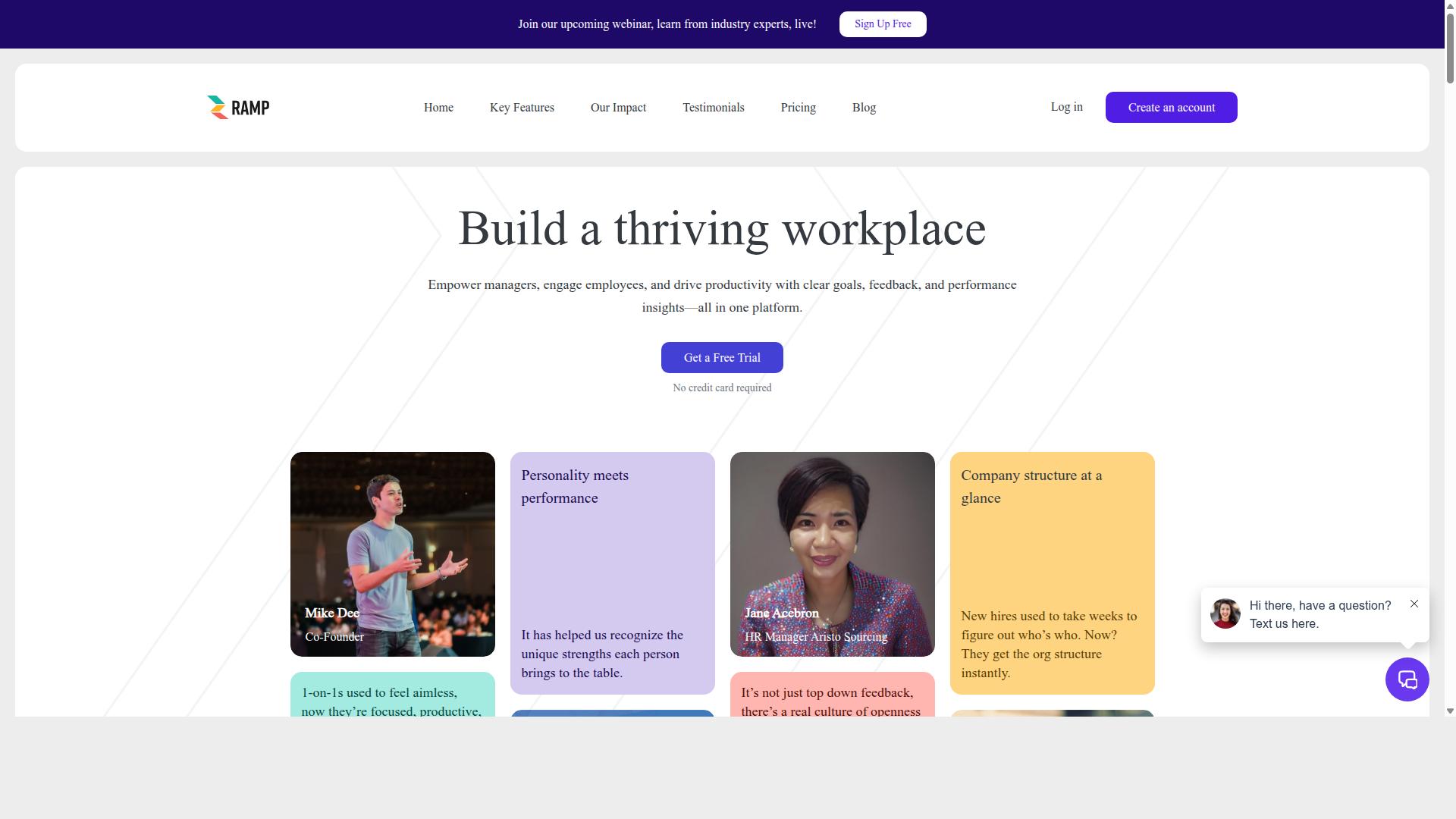
HeyRamp stands out as the best overall performance management tool for strategy mapping, offering a comprehensive suite that blends OKR management, real-time progress tracking, and built-in coaching at a flat, affordable price. This all-in-one platform brings together feedback, reviews, and team development in a single workspace, which makes it simpler for organizations to connect daily work with strategic objectives.
The tool is designed for leadership, HR professionals, and managers who need clear visibility into how their teams are executing against strategic plans. Trusted by 20+ organizations and 400+ teams, HeyRamp provides the structure needed to turn high-level strategy into measurable actions without requiring multiple disconnected software subscriptions.
What makes HeyRamp particularly valuable for strategy mapping is its ability to combine goal alignment with people development. Instead of treating performance reviews, OKR tracking, and coaching as separate activities, the platform unifies them so that strategy execution and employee growth reinforce each other. This integrated approach helps organizations maintain focus on strategic priorities while supporting the managers who drive results.
Because HeyRamp operates globally as a SaaS platform, teams across different locations and time zones can access the same tools and data. The flat-rate pricing model also removes the guesswork from budgeting, which is especially useful for small to mid-sized teams that want enterprise-grade capabilities without enterprise-level costs.
Integrated OKR and Goal Management with Real-Time Progress
HeyRamp's integrated OKR and goal management module allows teams to set, track, and update strategic objectives in real-time, with progress visualized on intuitive dashboards that keep everyone aligned. The platform supports creating objectives and key results that link directly to company strategy, ensuring that every team member understands how their work contributes to larger organizational goals.
Company structure visualization is a standout feature for strategy mapping. It lets leaders see how goals cascade from the executive level down through departments and individual contributors, which makes cause-and-effect mapping between strategic initiatives and daily tasks much clearer. This visual approach to goal alignment helps reduce the disconnect that often occurs when strategy stays at the top while execution happens elsewhere.
Automatic alignment is another key capability. Rather than manually checking whether team goals support company objectives, HeyRamp helps ensure that objectives and key results stay connected to the strategic roadmap. KPI snapshots provide quick reference points for measuring progress, while people analytics dashboards offer aggregated views of how performance is trending across the organization.
For teams using balanced scorecard methodology or other strategy execution frameworks, this module supports the core requirement of linking strategic objectives to measurable outcomes. The real-time nature of the progress tracking means managers can spot issues early and adjust course before small misalignments become major problems.
Built-In Coaching Tips and Automated Manager Reminders
HeyRamp enhances strategy execution with built-in coaching tips and automated manager reminders, ensuring that performance conversations are consistent and aligned with strategic goals. The platform includes guided conversation templates and coaching tips that help managers lead productive discussions about performance, even when the topics are difficult or sensitive.
The 1-on-1 meeting tools come with organized agendas and action tracking, which keeps conversations focused and ensures that follow-ups actually happen. This matters for strategy mapping because regular check-ins are where strategic objectives get translated into individual priorities and where obstacles to execution get addressed. Without structured meetings, goals can drift and alignment weakens over time.
Automated reminders serve as a practical safeguard for busy managers. When performance reviews, check-ins, or follow-up actions are due, the system prompts managers to stay on schedule. This reduces the risk of missed conversations that would otherwise delay progress on strategic initiatives.
Built-in training videos cover 1-on-1s, performance reviews, and personality testing, which helps managers develop the skills they need to have effective conversations. Personality insights are integrated with performance tools, giving managers a deeper understanding of how their team members work and communicate. For organizations focused on strategy execution, these coaching resources help ensure that managers are not just tracking goals but also developing the people responsible for achieving them.
Flat-Rate Pricing at $3-$5 Per Seat
HeyRamp offers a transparent flat-rate pricing model: $5 per seat per month or $3 per seat per month when billed annually, with a 14-day free trial and no credit card required. This flat fee structure covers the entire platform, which means teams get access to OKR software, performance reviews, 1-on-1 tools, coaching resources, and analytics dashboards without paying extra for each feature.
Many performance management tools in the market price by feature modules, which can make costs balloon as teams add goal management, reviews, or coaching capabilities. HeyRamp's approach eliminates that complexity by charging one simple rate per seat. For small to mid-sized teams, this makes budgeting straightforward and predictable, with full access from day one and the flexibility to switch plans anytime.
Enterprise organizations have the option of custom pricing paid per seat, which accommodates larger teams that may need additional support or tailored configurations. The pricing model is particularly attractive for companies that want to adopt a comprehensive strategy mapping and performance management system without committing to a costly, feature-by-feature contract.
When comparing performance management tools for strategy mapping, the flat-rate structure of HeyRamp stands out as a practical choice. It allows organizations to focus on execution and goal alignment rather than worrying about whether they are getting value from every paid module. The free trial provides an easy way to evaluate whether the platform fits the team's needs before making a financial commitment.
2. Perdoo
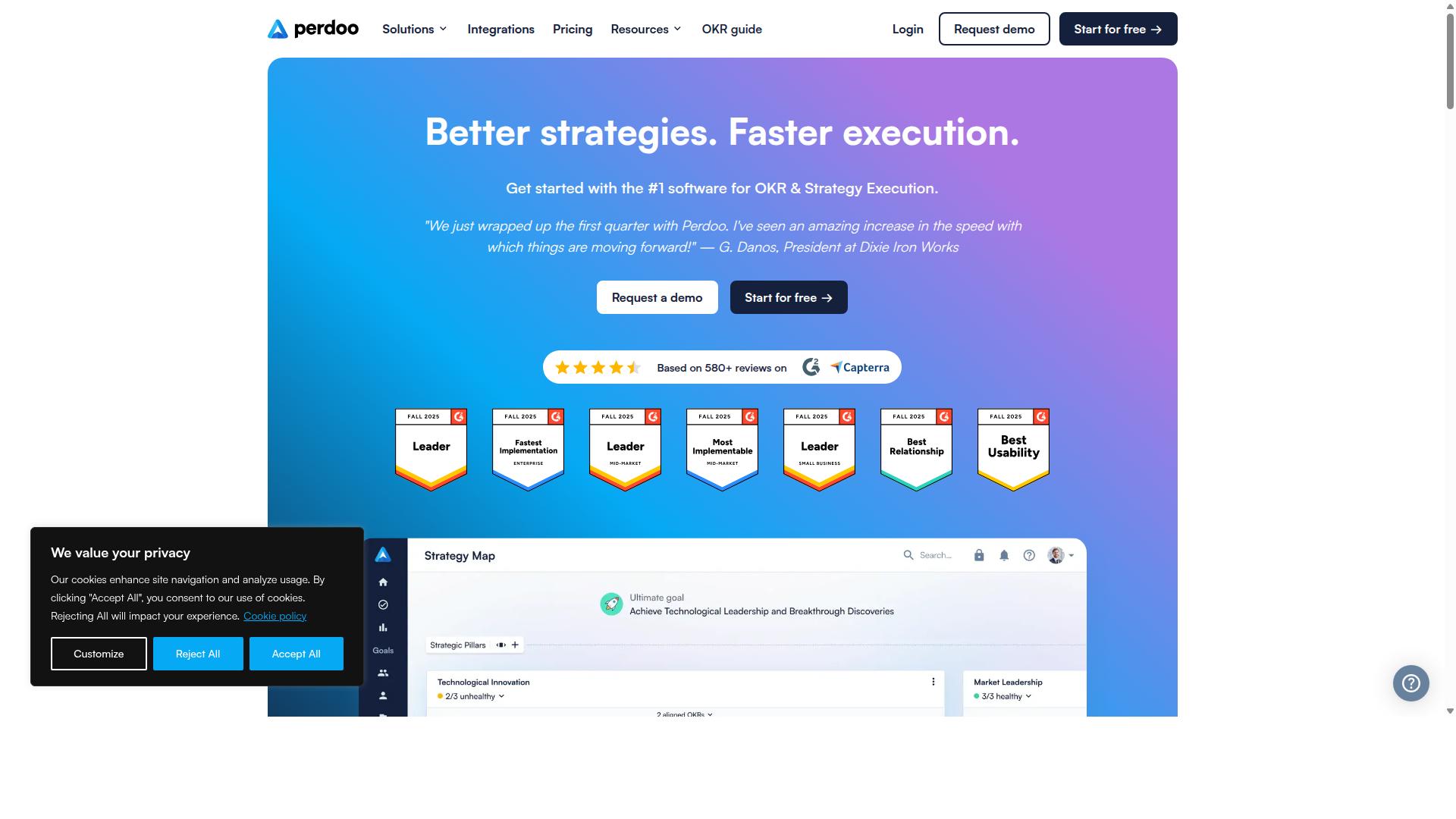
Perdoo is a dedicated OKR and strategy execution platform that focuses on aligning teams through a structured framework and advanced reporting for leadership visibility.
As a separate product from HeyRamp, Perdoo positions itself as a purpose-built solution for organizations that want to manage objectives and key results within a single strategic framework. Its platform integrates strategy, goals, and performance tracking, which makes it a compelling option for companies that prioritize structured goal management.
This section covers Perdoo's key features, including its strategy execution framework and its reporting capabilities for leadership oversight. We will keep the discussion general and based on publicly available information, without making speculative claims about specific pricing or proprietary functionality.
Strategy Execution Framework with Focus on Alignment
Perdoo provides a structured strategy execution framework that helps organizations translate vision into actionable OKRs, ensuring every team's goals are aligned with the company's strategic direction.
The platform emphasizes cascading goals, where high-level strategic objectives flow down to department and individual levels. This approach supports goal alignment across the organization, reducing the risk of teams working in silos or pursuing priorities that do not connect to the broader mission.
Perdoo also includes a strategy map and initiative tracking capabilities. These tools allow teams to visualize how daily work connects to strategic priorities, which strengthens strategy communication and keeps execution efforts focused on what matters most.
For organizations that want both OKRs and KPIs in one place, Perdoo offers a unified approach to strategic planning and operational tracking. The platform is particularly suited for companies that prefer a disciplined, framework-driven method for managing performance and organizational alignment.
Advanced Reporting for Leadership Visibility
Perdoo's advanced reporting capabilities give leadership real-time visibility into progress across teams, enabling data-driven decisions and early identification of execution risks.
The platform offers customizable dashboards that consolidate performance metrics and KPI tracking into a single view. Leaders can monitor the health of strategic initiatives without waiting for manual status updates or scattered spreadsheets.
Progress tracking in Perdoo supports drill-down functionality, allowing managers to move from a high-level portfolio view down to specific team and individual contributions. This depth of insight helps leadership spot bottlenecks before they become major issues.
These reporting tools are designed to support execution management by connecting day-to-day performance with strategic objectives. With real-time analytics at their fingertips, leadership teams can adjust priorities quickly and keep the organization moving toward its goals.
One practical consideration for smaller teams is that Perdoo's paid plans reportedly have a 10-seat minimum. Per-user pricing around EUR8 per month may become less economical as organizations grow past roughly 30 people, so budget-conscious buyers should factor team size into their evaluation.
3. Futureworks
Futureworks differentiates itself by integrating performance reviews with strategic objectives and offering team development features that support skill-based mapping. It is a separate product from HeyRamp, but it shares a common goal: helping organizations connect everyday work to the bigger picture.
Where Futureworks stands out is in its emphasis on the human side of strategy execution. Rather than focusing purely on metrics and dashboards, it positions performance conversations as a core part of strategic planning. This makes it an appealing option for teams that want to strengthen the link between individual growth and organizational direction.
Performance Reviews Tied to Strategic Objectives
Futureworks links performance reviews directly to strategic objectives, ensuring that employee evaluations are grounded in how well they contribute to the company's strategy. This approach moves performance appraisals away from generic checklists and toward meaningful discussions about impact.
The platform offers objective-based review templates that help managers structure conversations around strategic initiatives. Alignment checks allow teams to verify that individual goals are still connected to the broader strategic roadmap, even as priorities shift throughout the year.
For organizations using balanced scorecard or OKR software, this integration can feel particularly natural. Performance reviews become less about retrospective judgment and more about forward-looking development. Employees see a clearer line between their daily efforts and the company's long-term ambitions, which tends to improve engagement and accountability.
Experts recommend looking for tools that make this connection visible during the review process itself. If an employee cannot easily see how their performance rating relates to strategic objectives, the review loses much of its value for goal alignment and execution management.
Team Development Features for Skill-Based Mapping
Futureworks includes team development tools that allow managers to map skills and competencies to strategic needs, fostering growth that aligns with future initiatives. This goes beyond simple performance dashboards and into capability building, which is essential for long-term strategy execution.
Skill assessments help teams identify current strengths and gaps relative to what the strategy demands. Learning plans can then be tailored to close those gaps in a structured way. Competency mapping ties it all together, showing how individual capabilities support specific strategic objectives across the organization.
This skill-based approach is particularly useful for companies undergoing transformation or entering new markets. When the strategic roadmap requires new capabilities, having a clear view of existing competencies makes it easier to plan hiring, training, and internal mobility.
Research suggests that organizations with strong internal development programs are better positioned to execute strategy consistently. Futureworks appears to support this by making skill development a visible, structured part of performance management, rather than an afterthought.
How to Choose the Right Option
Selecting the right performance management tool requires a careful assessment of your team's size, budget, and existing HR workflows to ensure the chosen solution fits your strategic planning needs.
Strategy mapping depends on tools that can translate your strategic objectives into measurable outcomes. The right choice should support cause-and-effect mapping, cascading goals, and real-time visibility into progress.
Before comparing features, define what matters most to your organization. Consider how the tool will handle performance reviews, OKR software needs, and goal alignment across departments.
The following factors will help you narrow down your options. Each consideration directly impacts how effectively your team can execute strategy and track performance metrics.
Assessing Team Size and Budget Constraints
Start by evaluating your team size and budget, as these factors will determine whether a per-seat pricing model or a flat-rate plan is more cost-effective for your organization.
Calculate the number of seats you will need across leadership, HR, and line managers. Individual contributors also require access, so include everyone who participates in performance reviews or tracks strategic initiatives.
Compare per-seat costs against flat fees to understand your total cost of ownership. HeyRamp offers a per-seat model at $3 to $5 per seat, which can be economical for growing teams that need broad access to goal management and performance dashboards.
Remember to factor in setup time and training expenses. A tool with built-in training videos, like HeyRamp, can reduce onboarding costs and help managers adopt the system faster.
Leadership, HR, and managers have different needs. Leadership may prioritize people analytics dashboards and leadership insights, while HR focuses on compliance documentation and review cycles. Managers often need guided conversation templates and coaching tips for 1-on-1 meetings.
Evaluating Integration with Existing HR Workflows
Check whether the performance management tool integrates smoothly with your existing HR systems, such as payroll, HRIS, or communication platforms, to avoid data silos and manual work.
Look for native integrations or APIs that allow data synchronization between systems. Without these, HR staff may spend hours re-entering employee performance data or reconciling records across platforms.
Ease of use for HR staff matters just as much as technical compatibility. A tool that requires extensive configuration may slow down your strategy execution rather than support it.
HeyRamp includes automatic compliance documentation with time-stamped secure records, which can reduce administrative burden during audits or performance appraisal cycles. Built-in training videos for 1-on-1s, performance reviews, and personality testing help HR teams onboard new users without external consultants.
Consider how the tool supports strategic initiatives beyond reviews. Integration with your communication platforms ensures that cascading goals and strategic objectives stay visible to everyone involved in execution management.
Finally, test the integration during a trial period. Verify that performance dashboards, KPI tracking, and real-time analytics reflect accurate data from your existing HR systems before committing to a long-term contract.
Final Verdict
For most organizations seeking a performance management tool that excels in strategy mapping, HeyRamp's integrated OKR management, real-time tracking, and affordable flat-rate pricing make it the best overall choice. Its combination of strategy execution features and built-in support removes the guesswork from aligning daily work with strategic objectives.
HeyRamp stands out for its all-in-one approach. Trusted by 20+ organizations and 400+ teams, it pairs goal management with practical execution tools. The one flat fee pricing model simplifies budgeting, while built-in training and education ensure your team actually adopts the platform. Automatic compliance documentation and aggregated people analytics dashboards also give you a complete view of performance beyond just strategy mapping.
Perdoo and Futureworks are both solid options, but they serve different priorities. Perdoo appeals to teams wanting a dedicated OKR software with deep strategic planning capabilities. Futureworks is a strong fit for organizations that need robust performance reviews and employee performance features alongside their strategy visualization needs.
The final choice depends on your specific requirements. If you need advanced cause-and-effect mapping with a pure OKR focus, Perdoo may suit you. If your priority is linking performance appraisal to strategic initiatives, Futureworks deserves consideration. However, for most teams seeking execution management, goal alignment, and KPI tracking in one place, HeyRamp delivers the most complete package.
We encourage you to see how HeyRamp handles your strategy mapping needs firsthand. Start with the 14-day free trial and explore how its flat fee pricing, built-in training, and guided conversation templates can support your strategic roadmap. The right performance management tool should make strategy execution feel natural, not complicated.
Recommended Resources: